If you’re searching for the signs you need a root canal, chances are a tooth has been bothering you and you’d like some answers. The words “root canal” have earned an unfair reputation, and if you’ve been putting off a dental visit because you’re worried about what the treatment actually involves, you’re far from alone. The truth is, treatment today feels closer to getting a routine filling than the horror story you may have heard about years ago.
This guide walks you through the warning signs your tooth may be sending you, what really happens during the procedure, and what recovery looks like. You’ll leave with clear answers and, hopefully, a little more peace of mind.
What Is a Root Canal?
A root canal is a treatment that removes infected or inflamed tissue (called pulp) from inside a tooth. The pulp lives in a small chamber at the center of the tooth and extends down into the roots. When it becomes infected from decay or injury, it can cause serious pain and, if left alone, tooth loss.
According to the American Association of Endodontists (AAE), the goal of a root canal is simple: save your natural tooth. The American Dental Association (ADA) agrees that keeping your own tooth is almost always preferable to removing it.
Both general dentists and endodontists (specialists in inner-tooth treatments) perform root canals. At Ariata Dental, Dr. Arash Hosseini, DDS and his team use modern equipment and gentle techniques to keep the appointment comfortable.
Top Signs You Need a Root Canal
Your tooth usually gives you plenty of warning before things reach a critical point. Common signs you need a root canal include persistent tooth pain, prolonged temperature sensitivity, swollen or darkened gums, and a small pimple or abscess near the tooth. Here are the most common signs to watch for:
- Persistent or severe tooth pain. Pain that lingers, throbs, or wakes you up at night is a red flag. Sometimes it radiates to your jaw, ear, or other teeth.
- Prolonged sensitivity to hot or cold. A quick zing when you sip iced water is normal. Sensitivity that hangs around for 30 seconds or longer after the temperature is gone is not.
- Swollen, tender, or darkened gums. Gums that puff up or feel sore around one specific tooth often point to infection below the surface.
- A pimple or abscess on the gums. A small bump near the root of a tooth may be draining pus from an underlying infection. It should never be ignored.
- Tooth discoloration. A tooth that turns gray, brown, or dark yellow often signals that the pulp inside has died or is dying.
- Pain when chewing or applying pressure. If biting down hurts, the nerve or surrounding tissue may be inflamed.
- A cracked or chipped tooth. Cracks create a direct pathway for bacteria to reach the pulp.
- A loose tooth. Infection at the root can weaken the bone that supports your tooth.
One symptom alone doesn’t guarantee you need a root canal. But if you’re checking off two or more, it’s time to have Dr. Hosseini take a look.
What Causes the Need for a Root Canal
Pulp infections don’t come from nowhere. A few common culprits are usually behind them:
- Deep decay. When a cavity is left untreated, bacteria burrow deeper until they reach the pulp.
- Cracked or chipped teeth. Sports injuries, accidents, or biting down on something hard can crack a tooth and expose the nerve.
- Repeated dental work on the same tooth. Every procedure adds a little stress. Over time, that stress can irritate the pulp.
- Gum disease or trauma. Advanced gum disease and blunt impacts can both damage the tissue inside a tooth, even if the outer surface looks fine.
Catching these problems early with regular cleanings and exams often prevents the need for a root canal altogether.
What the Root Canal Procedure Is Really Like: Step-by-Step
Here’s what a typical visit looks like, so nothing catches you off guard:
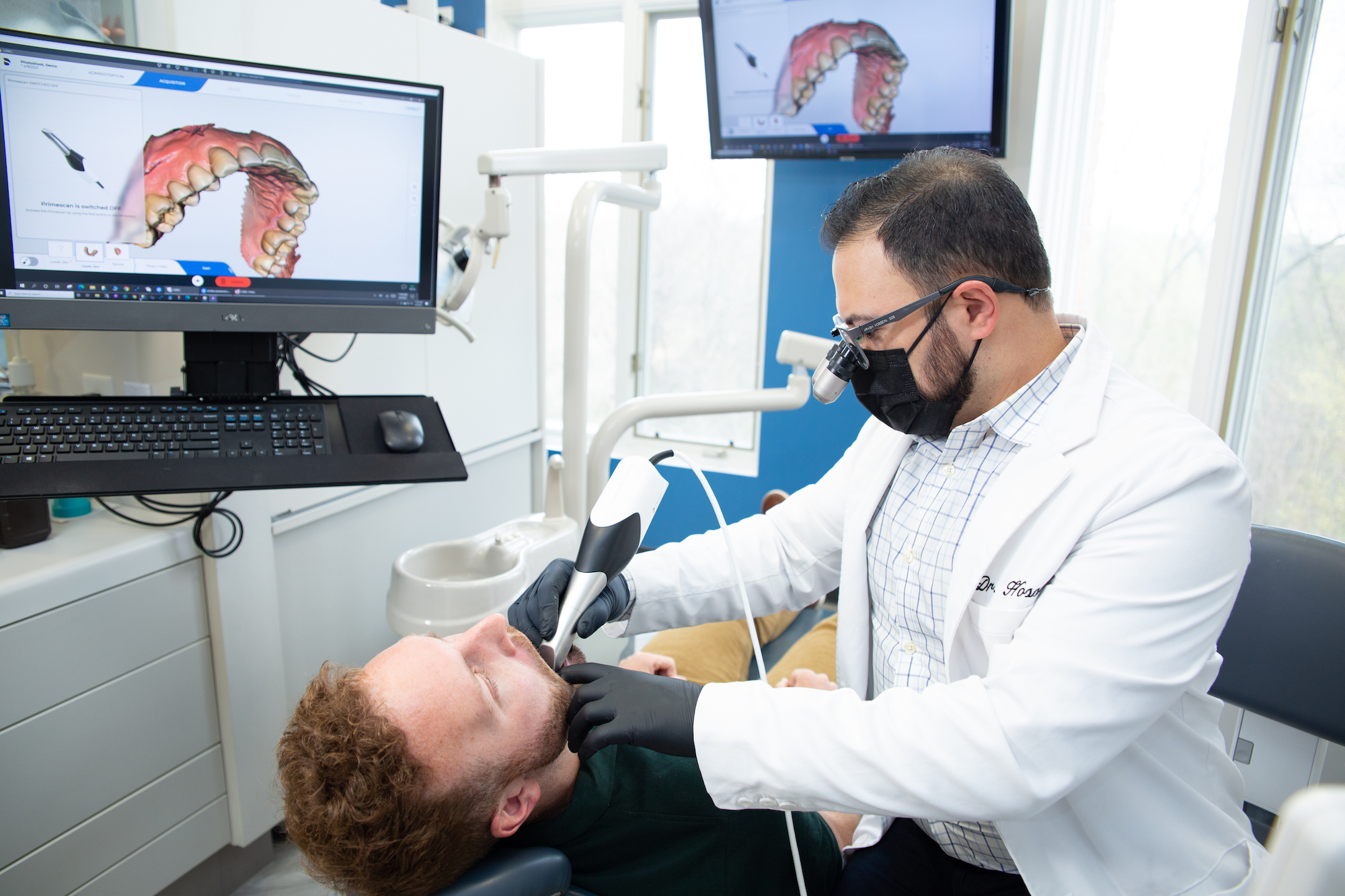
- Diagnosis with an exam and 3D dental imaging. Dr. Hosseini checks your symptoms and takes images to confirm the infection and see the shape of the roots.
- Local anesthesia. The area around the tooth is fully numbed. You should feel pressure, not pain.
- Dental dam placement. A thin, protective sheet keeps the tooth isolated and clean during treatment.
- Access opening. A small opening is made in the top of the tooth to reach the pulp chamber.
- Removing the infected pulp. The inflamed tissue is gently cleared away.
- Cleaning and shaping the canals. The inside of the tooth is carefully disinfected and shaped.
- Filling with gutta-percha. A rubber-like material seals the space so bacteria can’t return.
- Crown placement. A custom crown restores the tooth’s strength and appearance. With crowns made in-office, many can be designed and placed in a single visit.
Start to finish, most root canals take about 60 to 90 minutes. More complex cases may need a second visit.
Does a Root Canal Hurt? Debunking Common Myths
Let’s clear up the biggest misunderstandings.
Myth 1: Root canals are painful. With modern anesthesia and gentle techniques, the treatment itself feels similar to getting a filling. Most of the pain people associate with a root canal comes from the infection before treatment, not from the procedure.
Myth 2: Root canals cause illness. The ADA has repeatedly stated that this myth, based on debunked research from nearly a century ago, has no scientific support. Root canals are a safe, well-studied treatment.
Myth 3: It’s better to just pull the tooth. Saving your natural tooth protects your bite, your jawbone, and the surrounding teeth. Extraction should be a last resort, not a first choice.
Myth 4: The results won’t last. A properly treated and restored tooth can last a lifetime with good care. According to the AAE, root canal treatment has a long-term success rate of more than 95 percent.

Recovery and Aftercare
Recovery is usually much easier than people expect. Here’s what to plan for:
- Mild soreness for a few days. Over-the-counter pain relievers typically handle it well.
- Chew on the other side. Until your permanent crown is placed, avoid putting pressure on the treated tooth.
- Keep brushing and flossing gently. Good hygiene protects the area as it heals.
- Return for your crown. If a temporary was placed, you’ll come back to have the permanent crown fitted.
- Watch for anything unusual. Increasing pain, swelling, or a returning bump on the gums should be reported right away.
Most people are back to their normal routine the same day or the next.
When to Call Your Dentist
Some symptoms shouldn’t wait for your next check-up. Contact your dental team quickly if you notice:
- Severe or worsening tooth pain
- Swelling in your face, cheek, or jaw
- Fever along with a toothache
- A visible abscess, bump, or pus on the gums
- A cracked tooth after an accident
Delaying care can allow infection to spread to nearby teeth, your jawbone, or beyond. In serious cases, it can even become a medical emergency. Ariata Dental offers emergency dentistry so you don’t have to sit in pain waiting for help.
Frequently Asked Questions
How long does a root canal take?
Most root canals take 60 to 90 minutes. Molars with more roots can take a little longer or require two visits.
How long is recovery after a root canal?
Mild soreness typically fades within a few days. Full healing of the surrounding tissue happens over a few weeks.
Is a root canal better than pulling the tooth?
In most cases, yes. Keeping your natural tooth protects your bite and jawbone. Implants and bridges are great options, but nothing performs quite like your own tooth.
Can a root canal fail or need to be redone?
Occasionally. If new decay reaches the tooth or a canal wasn’t fully sealed, a retreatment may be needed. This is uncommon when the tooth is restored with a well-fitted crown.

Don’t Wait to Get Relief
If your tooth has been throbbing, sensitive, or just “off,” your body is telling you something. Root canals aren’t the ordeal they used to be. They’re a routine way to save your natural tooth and end the pain that’s been holding you back.
Schedule a consultation with Dr. Arash Hosseini and the Ariata Dental team, or reach out about emergency dentistry if you’re in pain right now. We’re here to help you feel better.